Be yourself; Everyone else is already taken.
— Oscar Wilde.
This is the first post on my new blog. I’m just getting this new blog going, so stay tuned for more. Subscribe below to get notified when I post new updates.
Be yourself; Everyone else is already taken.
— Oscar Wilde.
This is the first post on my new blog. I’m just getting this new blog going, so stay tuned for more. Subscribe below to get notified when I post new updates.
King’s Quest VI takes place in a medieval-fatansical setting, therefore Alexander’s rhetoric is far more sophisticated than other games we’ve looked at. The rhetoric, accompanied by animations and voice-acting creates a very immersive atmosphere. Having the power to interact with different characters who have scripted dialogue, it’s very easy for the player to fill Alexander’s shoes. With the accompaniment of music, this game really aims towards influencing the player’s pathos. The first time I played this game, I drowned by trying to find the swimmer who disappeared in the ocean. Unfortunately, I got swept out to sea and died. The second time, I jumped in when the boy was there, and he didn’t bother to save me and I died a second time. Here, the story is telling me to be wary of strangers, which makes sense to why it was intentionally scripted that the merchant was a “man he could trust”. This also says something about the hostility and evil of this world. Since this game exists in a setting we aren’t familiar with, there is a lot of context revealed in the characters dialogue.
Once I realized that I could toggle between the actions options by right clicking, it was much easier for me to get through the game. Similar to Zork, it’s important for the player to look around in every area, because there’s always something hidden. In Zork, the hidden trapdoor was only revealed when you moved the rug. In King’s Quest VI, when you move the wooden plank on the beach, there’s a box where the player can find a gold coin. Since King’s Quest VI has graphics, it’s easier for the player to remember Alexander’s path. In Zork, there were many times when I would type random directions because I couldn’t remember where I was.
Alexander’s call to adventure is to reunite with his lost love, Princess Cassima. He is clearly an outsider, and has to face the largest obstacle, the evil vizier, who clearly is manipulating royal power. In his monologue about Cassima’s family, he says, quite suspiciously, “I assure you, our marriage is all Cassima wants now.” While I haven’t gotten to the part where we compete for her love, it’s evident that we will talk to him again, even though he kicked us out of the castle. While I definitely haven’t reached the growth part of his journey, we meet a helper on the ship who gives me information about the magic map. I find it funny, because the merchant said “Advice is free Alexander, make use of it costs so much more,” and while the information of the magic map was free, I had to exchange my ring. I’m sure the trials and errors will happen once you explore the different Isles more.
Without even knowing that this game has fantasy elements, the merchant Alex has the ability to talk to says, “This is no ordinary land.” I think King’s Quest VI does a brilliant job world-building from the get-go. Even though it had animations, it accompanied them with specific details of a character’s appearance or personality so the player could create a full picture. While my game won’t have any motion mechanics, it’s very important for me to establish world-building through dialogue and create characters that are easy for the player to visualize. Also, one thing I noticed about this game was it’s use of constraints. Both Zork and this game have many constraints, which allows the player to still be able to deviate from the main story, but not get lost in the world. For example, I walked around the side of the castle and thought I could keep going, but a large boulder was in my way.
As explained in my reading response for City of Brass, this is my favorite reading which is why I am excited to read it completely for my final paper. While there’s probably man more resources analyzing The Hobbit’s and The Sorcerer’s Stone’s rhetoric, I’m too invested in the story to not finish it. For the daeva, he clearly uses a lot of logos and kairos. Nahri on the other hand, uses a lot of pathos and ethos, and the two often conflict each other. She understands who Dara is and his power over her, but she still fails to withhold her opinions.
City of Brass is hands down my favorite reading of the semester. Deduced from my own world-building project, I’ve always been passionate about Egyptian fantasy and magic. The fact that Nahri comes from a line of ancient healers just adds to my enthusiasm for my book, for I’m personally exploring healing techniques like reflexology and acupressure. This novel is incredibly descriptive and imaginative, and I became fully invested after Nahri described the chaotic apothecary. There’s a lot of terminology based off of Egyptian culture and mythology that I hope is explained later on in the novel. One of my favorite aspects about Nahri is her ability to sense illness. In other fantasy novels or shows I’ve watched, the healer’s ability to heal is never fully explained, and is often described as their hands held over the wound and simply healing it. Nahri’s ability to see shadows over organs or track the path of a baby inside a womb is an exciting change in how I visualize her healing powers.
I believe City of Brass can appeal to any audience with an interest in fantasy and ancient magic. The tone is complex enough that I don’t feel like I’m reading a middle-school novel, but it’s simple enough where I’m not overwhelmed by its vocabulary. I’m already charmed by Dara’s relationship with Nahri and curious to see his hardened personality open up and how his perspective changes over the course of their journey. I’d also love some more explanation in terms of his responsibility to her lineage.
In the first chapter, we are introduced to Nahri swindling some wealthy Turkish men. Sensing the older man’s fragile state of being, Nahri directly attacked his pathos by pretending his situation was out of her hands. This amplified the man’s anxiety so he was more willing to take her advice with little consideration of cost. If Nahri’s ethos weren’t so respectable the men wouldn’t have been so cooperative. The second man, Arslan, is definitely more logical, and she knew immediately she abused kairos when she lost her temper with them, knowing she did not need any more enemies.
With Dara being a daeva who’s in possession of many magical weapons, Nahri understands that it’s better to answer his questions, for they may reveal truth to her unknown identity. Dara understands Nahri wants water, and holds this above her so she’ll answer his questions despite the readers learning that he needs her alive, which means he would’ve given her water regardless.
Lastly, in the third chapter, Khayzur is convincing Dara to take Nahri to Daevabad. Dara tries to put Nahri in the hands of the peri, but Khayzur speaks logically, saying there was no hope for the girl and that her life is his responsibility. You see the peri change his language when he talks about how the girl will be killed slowly and gleefully, and attacks Dara’s pathos by saying it would be entirely his fault. This was successful, for even though the daeva has some resentments, he wanted the girl safe.
It’s very easy to fall into the mindset of #ownvoices. Today, I feel like people are much more critical, especially online. There can be a lot of backlash from the POC community or the LGBTQ+ community, who tear into characters or narratives and are completely blown out of proportion. Unfortunately, this is a result of mainstream white media and lack of representation, so that when there finally is a character, it’s easier to criticize their faults since there were few to begin with. As if to say, “We waited years to have a black Disney princess, and she’s a frog most of the movie?” Since Tiana is the only black princess, unlike the six other white Disney princesses, she can’t be a role model for the entire black community, and the backlash stems from a lack of representation, rather than appreciating that there is one to begin with.
I believe the key to writing about characters outside of your background, is to have their background, whether that be if they are disabled, a person of color, or queer, come second. Storytelling is only great when it tells a human experience, not just a black, white, Asian, indigenous, Hispanic etc experience. It’s the ability to make someone feel heard that does more justice than #ownvoices. If you tell the story right, then the next big step is to be accurate. Just like a documentarian or a reporter, you’re telling a story, and it’s important that you keep your facts straight and do your research. Sure, if you have an author of that background, then maybe they’ll be able to add layers to the story that appeals to a more personalized experience, but even they can’t speak for their entire background. One gay person can’t write for the entire lgbtq+ community, and this is why it’s important to have more and more stories.
One show that does this brilliantly is “This is Us”. There is no Asian person in their family, and simply walks the viewer through the life of a white and black family. But in this show, I have never felt more understood. I can relate to the black kid’s experience as a person of color, and someone adopted into a white family. I didn’t need the character to be Asian, because Randall, the character, was telling a story outside of himself. His story was there was an anxious kid who wanted to be perfect because if he wasn’t he wouldn’t be loved.
When the fantasy genre doesn’t focus on the handsome white knight saving the fair white princess, then the abilities to connect to any audience are limitless. If you were to tell a story about dragon people, then the only way an audience can relate to them is if they have very human experiences. In this case, you could have a story of a light-skinned dragon person feel ostracized by the purple-skinned dragon people, appealing to people who can relate to racial differences.
Back when I read religiously, high-fantasy adventure interested me more than romance or slice-of-life. As I’ve aged, I fell for vampires just as everyone else. Reading Twilight for the first time, I feel I’ve fulfilled a small fraction of my childhood that had otherwise been empty. I was surprised at how slow the first three chapters were. They weren’t necessarily boring, but in comparison to the few other books we had to read, there was minimal detail and far less worldbuilding. I’ve always been intimidated by the length of books, but this book is such an easy read I probably could finish it in a few days.
At first glance, it’s clear to see that the author’s purpose of the story is to show Bella embracing the unfamiliar and change. Bella in a way relates to the Cullen family in terms of them being outsiders, and the story probably revolves around her being an outsider and finding acceptance in the Fork community.
Taylor Laughtner and Robert Pattinson definitely won the hearts of many girls, but the storytelling and mysticism around magic, vampires, and werewolves is something I believe anyone can enjoy.
One example of kairos I vividly remember is when Bella wants to confront Edward about his weirdness but doesn’t. While it is inferred that this is probably something she would’ve done in her hometown, being a newcomer she doesn’t want to tarnish her reputation just yet. If she were to confront him when he was ignoring her, she may have gotten a different reaction from him than she would’ve liked.
In our introduction to Edward, Jessica seems to have a bit of edge when talking about the Cullen family, admitting things reluctantly. She tells Bella “Don’t waste your time. He doesn’t date. Apparently none of the girls here are good-looking enough for him” (22). While Jessica didn’t clearly state that she had any affiliations with Edward, to maintain her ethos she simply doesn’t mention it. She tries to persuade Bella from falling for Edward, in hopes to protect her, by using pathos.
Mike clearly is interested in becoming Bella’s friend, and even appeals to her pathos by saying, “If I were lucky enough to sit by you, I would have talked to you” (26). Right off the bat you can tell that he is a friendly, and admiring character.
Another instance of rhetoric is when Bella demands Edward to explain what happened when he suddenly appeared by her side and saved her from the approaching truck. To keep his credibility as a “normal” citizen of Forks, he withholds the truth. He also says that no-one will believe her if she tells the truth, diminishing her own ethos/credibility.
In chapter 2, Bella hesitantly asks about the Cullen family. While she starts off claiming that the kids were “different” (36), she backpedaled after Charlie gave the longest speech Bella has ever heard. At this time, she realized it was best not to talk to him about her genuine concerns, utilizing kairos effectively.
An example of a metaphor I found is Bella calling Mike a puppy, and commenting on his puppy-dog behavior.
History Heka is the underlying force of the visible and indivisible world. While heka can be described to be the magical source the creator used in making the world, he is also the personification of magic itself. Heka is the power that makes balance, harmony, and every other concept or aspect of life possible. Unlike other golds who have a cult following, Heka lives an inconspicuous existence. He is the sole source of power behind the gods whose names and stories have become synonymous with Egyptian culture. By dispersing his heka throughout the universe, he can regulate the amount of magic the other gods can access.
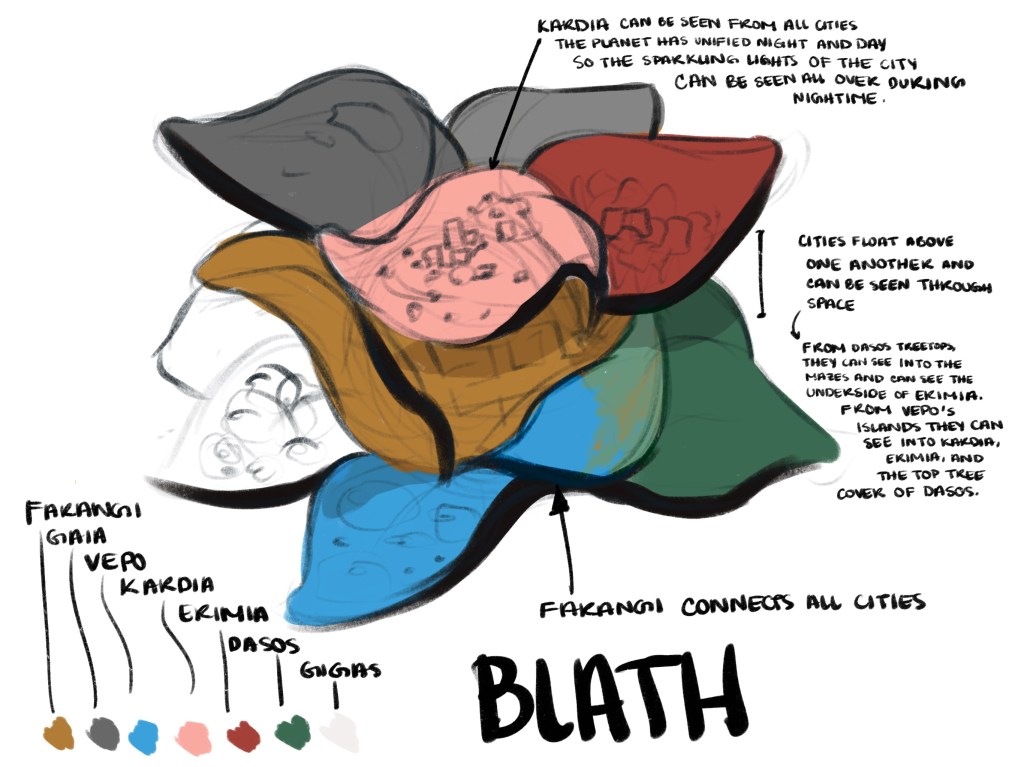
The city of Gaia used to be earth. The ancient world as we know it continued to thrive and advance by respecting their relationship with heka. At this time, humans were circulating Heka’s magic and all was balanced. Come the 21st century, the god Webb implanted knowledge of technology into human societies. Note: Technology in the 21st century is not Apple, think Bladerunner x Asgard. Over a duration of generations, humans gradually abandoned their magic practices and were pulled away from their natural internal state. Having complete control over earth, Webb’s power dominated all gods under Heka. With all of Earth’s unused magic, Webb tried to consume it. However, the raw power of Earth’s magic that had accumulated for centuries, was too powerful to control and consumed him. He imploded due to the magic’s strength causing Earth to explode into the planet we recognize as Blath. Current generations of Blath refer to this day as Keyded, the slaughter.
Children of Blood and Bone is definitely a title that would’ve grabbed my eye in middle school. Despite its popularity, I’ve only now heard of this story. I loved the wisdom and nurturing personality of Mama Agba. I loved the origin story of the white-haired maji and their relationship with the gods, but I’m still curious about the god’s sudden disappearance. Staff fighting definitely contributed to the preexisting mysticism surrounding the diviners, and the Raid reminded me of the fire nation from Avatar the Last Airbender. Adeyemi is very descriptive, which allowed me to visualize each scene in detail. I specifically enjoyed her describing the floating city of Ilorin and Zelie dashing along the string of boats towering with fish. Surprise isn’t necessarily the right emotion to describe my feelings, but I found it interesting how the cast system of Orisha surrounds the obsession around appearance and discrimination, however, it’s less race rather the complexion of one’s skin and hair.
Adeyemi subtly speaks against discrimination and bigotry. Despite being an epic high fantasy, Orisha still feels very real. The author breaks down the fear around ridicule for one’s skin color and hair, which can be directly related to black people’s stigma around their natural hair. In chapter three, lighter skin is a sign of nobility. There is a distinct cast system in Orisha that clearly revolves around appearance.
Zelie definitely abused rhetoric when the guards came to retrieve a tax. Zelie did not properly use kairos and spoke out of line while risking the safety of the others. After Mama Agba rewards Zelie with graduation and a new metal staff, she reminds her that while she has the power to fight, she needs to wait for the right timing.
Another instance I can remember Zelie using rhetoric, this time more successfully, was when Tzain mentioned the red-tailed sailfish as a last resort for finances. Using logos, she reminded her father and brother that the market is filled with people scrambling to meet the tax, and proposes the idea of selling it in the market with nobles. With her saying that she can help, and “she finally can do something right” you can see her purpose is to establish her own credibility and make up for the shame surrounding the maji. Tzain tries to appeal to Baba by attacking Zelie’s ethos, claiming she’ll do something stupid, wheras Zelie uses logos to argue against Tzain’s lack in bartering skills. By using rhetoric, both children are trying to persuade the father to let them go to sell the fish in a market in Lagos.
Once I was an avid writer who could easily dive into a fictional dimension and effortlessly describe a world down to the texture of the leaves that fall off trees. Having not exercised my writing muscle in a while, I built a world that felt comfortable using a reoccurring idea I’ve dabbled with for a few years. The world I built in our 30-minute class exercise had elements that I’m still enjoy writing about but overall, it was boring. The fun of writing fantasy, is that you can explore and build on ideas that you can’t fully understand. There has been a million stories about vampires, dragons, witches and wizards, but without a universal understanding that clearly defines “what” these beings are, the magic comes from our own interpretation. Some people might write about the standard vampire who hides in the shadows while others can build on these stereotypes to then creating a vampire who uses his immortality to challenge the gods.
The world I wish to create builds on ancient Greco-Roman Egyptian magic. In the Hellenistic period (late 4th-1st centuries BC), under the leadership of Alexander the Great, Egypt was taken over by a Greco-Macedonian dynasty. In this time, the country itself became bilingual and bi-cultural. The most vivid symbol of the new Greco-Egyptian culture that developed was the popularity of the Egyptian religion, particularly the goddess of Isis. I wanted to explore and build on the this blend of Egyptian and Greek culture and how Egyptian beliefs influences Greek discovery of philosophy, mathematical speculation, science, and the arts. There was an interest in magic during the Hellenistic age due to the greater abundance of texts in Greek and Latin. The spells and incantations that had been used by the Egyptians were carried forward by the Greeks. I spent around three hours diving into ancient magical practices and educating myself on new terminology like mágos, mana, and heka. To find more inspiration, I explored the plots of a couple magic animes: Fairy Tail and Little Witch Academia. There were some overlap in ideas, but their descriptions helped me find a better explanation for my world’s magic. Surprisingly, understanding the geography, ecology, history, culture, politics, and map of my world was quite easy. However, understanding the mechanics and origin behind the magic of my world and how or if the magic is directly related to the religion of my world is what I’m spending an immense effort trying to flesh out.
My world is called Blath, originating from the greek word, “flower” due to the planet’s flower-like appearance and also due to the planets Greek history. Imagine if the earth had 6 different moons, that broke through the atmosphere. There are six different distinct ecosystems on all “moons” (they are more so an extension of the central planet).
To keep my world a little bit of a surprise, I won’t go in depth about the world’s history and how the gods impact the magic that circulates throughout the planet, although I’m quite content on the twist I put on the old greco-Egyptian empire. A base idea I can provide is that there is a magic “cycle” that circulates the environment similar to oxygen, and is collected by the earth and plants. The world is full of magical energy- an ether that exists everywhere and accumulates overtime, therefore the older the object, the more power it obtains.
Hey there, my name is Ellery (based off of the 1930s mystery writer- Ellery Queen) but you’re welcome to call me Elle. I chose to major in animation, for both my love of art and world building, and having the creative power to immerse an audience in a reality far from our own. I was a huge bookworm in my adolescence, and fantasy was always my go-to. As someone with a vivid imagination, reading books with fantastical elements is far more entertaining than any nonfiction novel. While I haven’t indulged in any of the more mainstream series like Harry Potter or Lord of the Rings, I’ve read plenty books filled with gods, creatures, magic or otherwise. I have few assumptions of the fantasy genre mainly because of its undefined potential. I think fantasy correlates with magic, whether that be beasts, spiritual, spells, and even futuristic designs like mech/high-tech. To qualify as “fantasy,” the work must simply contain a world that can’t exist within our reality.

 Elle the Warlock